Diamonds formed deep within the earth over billions of years came to symbolize permanence, status, and romance precisely because of their scarcity. But as technology advances and consumer values shift, the definition of luxury is being quietly rewritten. At the center of this change is the lab-grown diamond.
What Exactly Is a Lab-Grown Diamond?
Lab-grown diamonds are not imitations. According to the Gemological Institute of America (GIA), they are chemically, physically, and optically identical to mined diamonds, produced using advanced methods High Pressure High Temperature (HPHT) or Chemical Vapour Deposition (CVD) that replicate the natural conditions under which diamonds form. What distinguishes a lab-grown diamond from a mined one is not composition, but origin: one grows underground over billions of years, the other grows in a controlled facility over a few weeks.
Why Consumers Are Choosing Lab-Grown Diamonds
Modern buyers are asking different questions than previous generations. Instead of focusing solely on origin myths and geological timelines, they're weighing environmental impact, ethical sourcing, and value for money.
1. Ethical and Environmental Transparency
Traditional diamond mining has long been associated with ecological disruption and opaque supply chains. While regulations such as the Kimberley Process have improved oversight, concerns remain. Lab-grown diamonds offer a level of transparency that aligns with contemporary expectations controlled production reduces large-scale land disturbance and removes much of the ethical ambiguity that has shadowed the mined-diamond industry for decades.
2. Accessibility Without Compromise
Fine jewellery has historically been aspirational and often financially out of reach. Lab-grown diamonds challenge that model by offering exceptional quality at a meaningfully lower price point. This doesn't dilute their beauty or integrity it democratizes luxury, letting buyers prioritize design, craftsmanship, and personal meaning over price tags inflated by scarcity alone.
3. Identical Quality, Different Story
Because lab-grown diamonds share the same crystal structure, hardness, and brilliance as mined diamonds, they perform identically in fine jewellery from engagement rings to everyday statement pieces.
Addressing the "Romance" Argument
Critics often argue that lab-grown diamonds lack the romance of natural stones the idea that a diamond formed over billions of years beneath the earth's surface carries undeniable emotional weight. But romance, like luxury, is subjective. For a growing number of buyers, the story behind a piece of jewellery is no longer about age or origin, but intention. Knowing a diamond was created without environmental harm or ethical compromise can be just as meaningful if not more so.
Redefining Luxury for a New Generation
Luxury is no longer defined purely by exclusivity. Today, it's increasingly associated with thoughtfulness, responsibility, and alignment with personal values. Younger buyers, in particular, view conscious consumption not as a sacrifice but as a form of discernment. In this context, lab-grown diamonds aren't a compromise they're a considered choice.
This doesn't mean mined diamonds will disappear; there will always be a place for natural stones and the traditions surrounding them. But the growing preference for lab-grown diamonds suggests the future of fine jewellery will be more diverse and more intentional. Rather than one definition of luxury, there will be many shaped by ethics, aesthetics, and individual belief.
FAQs
Are lab-grown diamonds real diamonds?
Yes. They have the same chemical composition, crystal structure, and optical properties as mined diamonds, and are certified by the same gemological labs, including [GIA]
Do lab-grown diamonds hold value?
They typically cost 30–50% less than mined diamonds of comparable quality, offering better value per carat, though resale value trends differ from natural diamonds.
Can you tell a lab-grown diamond apart from a mined one?
Not with the naked eye or standard jeweller's loupe. Specialized equipment is required, and all lab-grown diamonds are laser-inscribed and certified to disclose their origin.
The Bottom Line
The question isn't whether lab-grown diamonds can replace mined diamonds it's whether fine jewellery itself is evolving. All signs suggest it is. And in that evolution, lab-grown diamonds aren't merely participating they're helping lead the way.
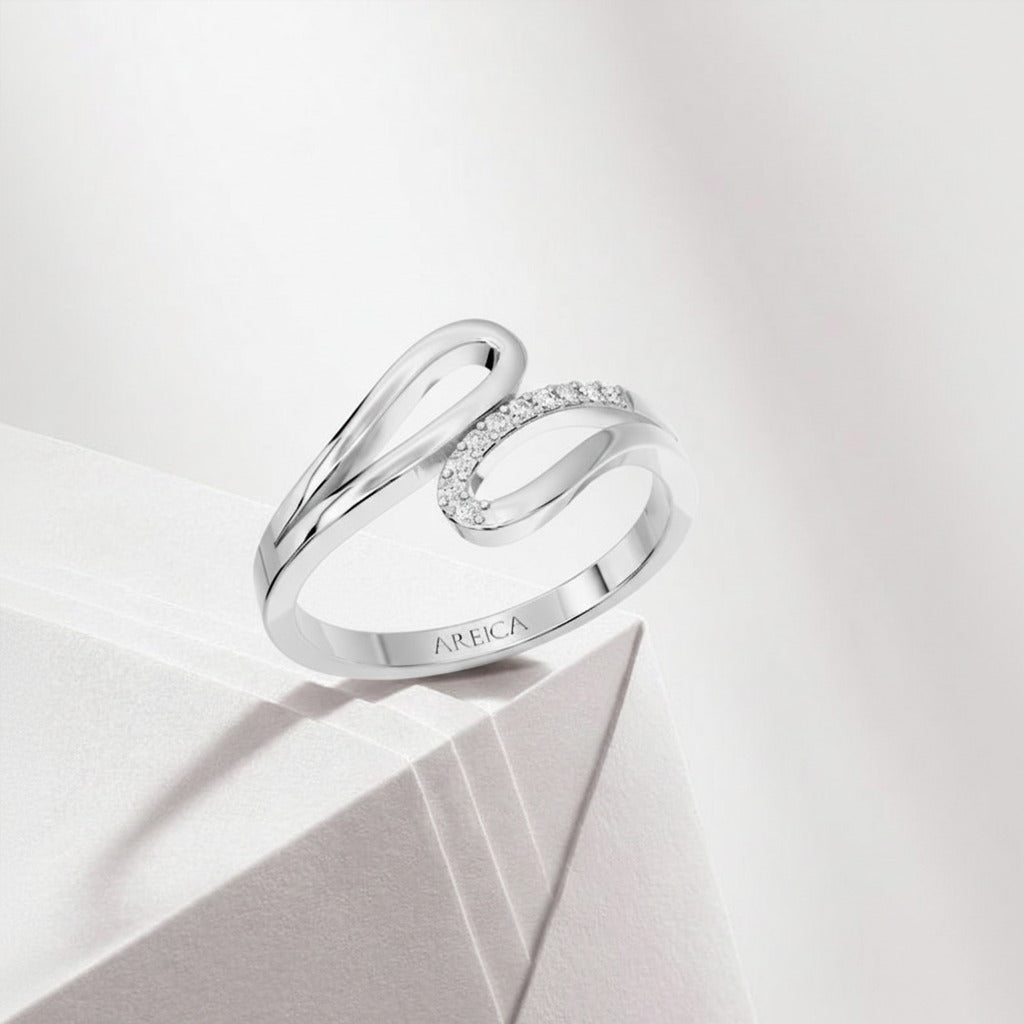
Explore Areica's lab-grown diamond collection crafted for those who want brilliance without compromise.